Wednesday, August 1, 2012

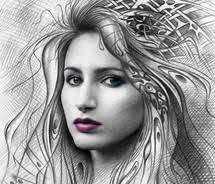
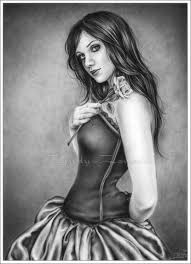
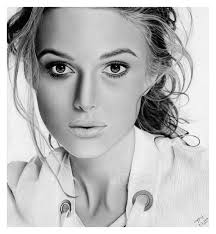
Girl Pencil Drawing

Source:Goolge.com.pk
Girl Pencil Drawing Biography
Madge Gill (1882-1961) was an outstanding exponent of mediumistic art and remains one of the foremost British Outsider artists. She was born in the East End of London, where she spent the greater part of her life. Her birth certificate bears the name Maude Ethel Eades alongside that of her mother, Emma Eades, yet lacks all mention of a father. Given the opprobrium attaching in Victorian times to an illegitimate birth, Madge spent her early childhood sequestered from the world, brought up by her mother and Carrie, her aunt, under the strict eye of her grandfather. There came a time when the family decided it could no longer cope with this embarrassing child, and, even though her mother was still alive, the nine-year-old was committed to Dr Barnardo’s orphanage at Barkingside. Five years later, she was transported by ship to Canada with hundreds of other juveniles, beneficiaries of a large-scale child-labour scheme devised by the orphanage to offer youngsters a fresh start in the New World. The teenaged Madge became a domestic servant and babysitter on a series of Ontario farms. Records show that it was common for such young immigrants to be maltreated, and there is little doubt that Madge nourished a fervent longing to return to England. At the age of eighteen, she succeeded in re-crossing the Atlantic and, once back in London, found work as a nurse at Whipps Cross hospital, Leytonstone. For a while she lived with her aunt Kate, who introduced her to Spiritualism and mediumistic practices. In 1907, Madge married Tom Gill, Kate’s son and thus her cousin. The marriage turned out badly, and relations became unpleasant. Within six years, Madge gave birth to three sons, Laurie, Reggie and Bob; the second boy died in the influenza pandemic of 1918. A year later, Madge gave birth for the last time, but her longed-for daughter was stillborn, her body perfect but for a disfigurement down one side. (There is no record of any name being given to this child.) Madge herself came close to death, and a subsequent lengthy illness resulted in the loss of her left eye, which was replaced with a glass one.

It was some weeks after her return to health, on 3 March 1920, that Madge Gill was first ‘possessed’ by Myrninerest, her spirit-guide. Madge was now thirty-eight, and her contact with this phantom figure would be maintained without interruption throughout the rest of her life. In his 1926 text Myrninerest the Spheres, her son Laurie bears witness to his mother’s first experience of delirious trance-states, which she found overwhelming and frightening. He evokes a whole gamut of creative modes at that time: drawing, writing, knitting, crochet-work, weaving, piano-playing. All this took place under the auspices of Myrninerest, whose signature appeared regularly on the drawings. In 1922, Madge underwent treatment at a clinic for women’s diseases at Hove, on the south coast. While there, she confided a packet of drawings to a woman doctor, who brought them to the notice of the Society for Psychical Research in London. A document in its archives records the expert opinion of a Research Officer, who judged the drawings to be “more of an inspirational than of an automatic kind”.

Madge Gill’s vicissitudes were far from over. Relations with her husband had deteriorated for some time past, and he had begun to seek female company outside the home. Young Bob was injured in a motorcycle accident and remained an invalid for two years: his mother devoted whole nights to sitting by his bedside, usually drawing or writing. In 1932, Tom was hospitalized, with a diagnosis of cancer. It was in this same year, at the age of fifty, that Madge participated for the first time in an annual exhibition of art by East End amateurs, mounted by the Whitechapel Gallery. She showed Reincarnation, a calico roll densely worked in coloured inks, which attracted national press coverage. Following Tom’s death in 1933, Madge continued to live with her sons, all three bound by a deep mutual affection. Until he died in 1948, her brother-in-law Bert Gill also lodged in the same house; he was an ardent follower of astrology.

From the 1930s on, Madge Gill enjoyed a reputation as a medium in her Upton Park neighbourhood. She is said to have organized séances at her home, drawing up horoscopes and offering spontaneous prophecies. It is not known for how long she conducted séances, though it seems likely that they lapsed after a few years. What continued unabated was her artistic production. While she still made heavily decorated cushions, quilts and dresses, her principal medium became ink-drawing, executed on postcards, sheets of paper or card, and long rolls of untreated calico cloth. Gill’s frenetic improvizations have an almost hallucinatory quality, each surface being filled with checkerboard patterns that suggest giddy, quasi-architectural spaces. Afloat upon these swirling proliferations are the pale faces of discarnate and nameless women, sketched perfunctorily, albeit with an apparent concern for beauty, and with startled expressions. It is tempting to interpret them in relation to Gill’s biography: is she referring to her lost daughter, her beloved aunts, or to some feminine ideal? Are these in a sense self-portraits, or rather: attempts to stabilize her own fragile being, as it were through fleeting snapshots? Another reading equates the faces with Myrninerest, envisaged as the artist’s otherworldly alter ego, immune to the traumas of actual life.

Gill’s craftsmanship is marked by unswerving perseverance. In a single evening, she was capable of getting through a dozen or more blank postcards, dating them conscientiously and adding Myrninerest’s familiar signature. To help her tackle the calico rolls, Laurie rigged up a mechanism which enabled the untreated areas to be exposed section by section, as the work proceeded. Madge was forced to stand upright for hours, wrestling with such technical problems as the scratchy surface and the tendency for ink to trickle downwards from the lifted pen. Unable to see the complete rolls inside the house, she would get her sons to rig them up in the back garden. In 1939, she exhibited one at the Whitechapel Gallery which, at almost forty metres wide, was probably her largest work ever: it occupied an entire gallery wall. She continued to exhibit annually at the Whitechapel till 1947. It is said she once turned down the offer of a show in an illustrious West End gallery, explaining that her works could not be sold, since they all belonged to Myrninerest. Sceptics have interpreted this supernatural reference as a convenient alibi, a way of deflecting attention from a compulsion she could not control, yet which remained indispensable to her life. Through the years, Gill rarely parted with her pictures, so that her lifetime’s production remained largely intact, hoarded in the attic of her East Ham house.

Thus is was that, for forty years, Madge Gill maintained the profile of the classic Outsider artist, pursuing a fertile and obstinate career with practically no audience and with no thought of selling her work. In 1950, her son Bob died; she had once prophesied that she would outlive him. Henceforth she would live alone with Laurie, always a loyal supporter of her artistry. She was now working on large sheets of card, completing them in batches of a hundred. She once confided to a cherished friend, a journalist called Louise Morgan, that every face she drew had significance, yet would say no more on the subject. One letter reveals that the artmaking had become a huge burden: “Dear Louise, I wish I could be normal”. Another letter speaks admiringly of the aged American naïve painter Grandma Moses.
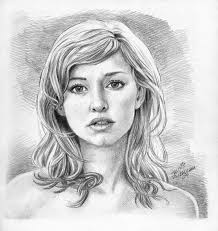
Girl Pencil Drawing
Girl Pencil Drawing
Girl Pencil Drawing
Girl Pencil Drawing
Girl Pencil Drawing
Girl Pencil Drawing
Girl Pencil Drawing
Girl Pencil Drawing
Girl Pencil Drawing
Girl Pencil Sketch
  
Pencil Drawing Of A Girl 

Charcoal Artists

Source:Goolge.com.pk
Charcoal Artists Biography

Charcoal & Graphite Portrait and Watercolor Portrait Artist
Tracey Costescu is a Vancouver artist specializing in realistic fine art acrylic, watercolor, oil or charcoal and graphite people and pet portraits. All artwork is created using acid free archival materials and is delivered with an invisible protective coating to ensure smudging and fading does not occur over time. All of my clients receive a unique link to view the progress of their portrait commssion from beginning to end.

Graphite & Charcoal Portraits and Watercolor Portraits

Realistic interpretations of the person or pet is what I strive for, however my goal is not to imitate the reference material used but to obtain a truthful and accurate depiction of the person or pet. A strong likeness happens naturally during the drawing process. Many of my art portraits are custom commission charcoal and graphite portraits or watercolor portraits drawn from my client's photos.

My Pet Portraits are usually of cats and dogs but I love drawing horseses and all other animals from wolves to lizards. Please visit my Pet Portrait Gallery to view my past pet portrait commissions of cat portraits, dog portraits and horse portraits.

Commission a Hand Drawn Art Portraits

Commissioning a custom charcoal and graphite portrait or a watercolor portrait is a truly elegant way to capture your memories. Art portraits are unique and personalized gifts that last throughout the years.

Portraits can be commissioned for any occasions such as baby showers, weddings, anniversaries, graduations or birthdays, or for no occasion at all. Art prints and cards are also available for sharing your portrait with family and friends.

Learn to Draw or Paint

Learn to draw or paint at one of my workshops where we cover the various techniques for creating realistic pencil drawings of people, pets or still life subjects. You can find drawing tips and techniques or view works in progress of drawings from the beginning to the end. I also offer workshops in acrylic and watercolor ranging in subject matter from abstract to figurative.

Visit my blog or upcoming classes and/or workshops in the Vancouver area or contact me directly if you would like to host a workshop or demo in your area.

Charcoal & Graphite Portraits or Watercolor Portraits for Weddings

Gift certificates make great wedding gifts as the bride and groom are able to work directly with me and often chose to have the portrait drawn from their favorite wedding photo.

What better way to show the permanence of your relationship than with a custom graphite portrait of the bride and groom or members of the wedding party.

Have your graphite and charcoal portrait or watercolor portrait completed before your wedding to display for your guests at the wedding. After the wedding have a charcoal and graphite portrait or watercolor portrait completed of your favorite wedding photo. Prints are also available to be used as gifts for the wedding party and family.

Charcoal Artists
Charcoal Artists
Charcoal Artists
Charcoal Artists
Charcoal Artists
Charcoal Artists
Charcoal Artists
Charcoal Artists
Charcoal Artists
Supplies For Charcoal Drawing
  
Charcoal, Glue, Color And Sumi Ink Art 

Eagle Pencil Drawings

Source:Goolge.com.pk
Eagle Pencil Drawings Biography

“I’d like to paint until I’m 90. It’s a privilege,” says Barry Oretsky, underscoring the steadfast commitment to his art that began at a very young age. Oretsky was born in Owen Sound, Ontario on Georgian Bay in 1946, but at age three, his family moved to a neighborhood in downtown Toronto. There, the young Oretsky was sent to an orthodox yeshiva where art was forbidden. In spite of this prohibition advocated by both his school and family, Oretsky announced his decision to become an artist at thirteen, provoking intense disapproval on all sides. He subsequently attended Toronto’s Central Technical High School, earning a Commercial Art diploma in 1965, and then immediately left for London’s prestigious St. Martins School of Art where he’d been accepted into the post-graduate painting program.

From his earliest years as a painter, Oretsky worked as a pastel portraitist at the Canadian National Exhibition, a summer event similar to a large scale state fair in the US, with exhibitions and entertainment venues. Portraits in Pastel was one of the regular vendors at the Exhibition and Oretsky notes that he routinely produced between 500 and 1000 portraits per year for some twenty years; it provided enough supplemental income to allow him to travel and paint.

After leaving St. Martins in 1966, Oretsky traveled to Florence, Italy, where he helped with the rescue efforts for the disastrous flooding that threatened to destroy many of the city’s renaissance treasures. From there, he continued on to Israel where he lived first on a kibbutz and later in Tel Aviv. The years in Israel were formative both professionally and personally. In 1968, he became the youngest artist ever to have a painting accepted into the distinguished Canadian Biennial of Contemporary Art in Winnipeg; and he enlisted in the Israeli Army. His experience in the military introduced him to the grimness of war, but also to his future wife, another North American living in Israel.

In 1970, Oretsky moved back to Toronto where he earned his Permanent Teacher’s Certificate at the College of Education, University of Toronto, and began teaching art at a local secondary school. Three years later, the Oretskys returned to Israel as immigrants, settling in Hod Hasharon outside of Tel Aviv in 1973. It was during these years that Oretsky abandoned his earlier abstract painting and became a realist. While teaching for three years art at Haifa University, he focused his own study on the use of color and technique in realist painting.

Within three years, Oretsky was back in Canada, working as the Head of the Art Department at Thornhill Secondary School where he remained until 1986. A family vacation visit to the National Gallery of Art in Washington, D. C. in 1982, however, proved to be a major turning point in his work. After seeing an exhibition on Orientalist painting, he comments: “I started to hyperventilate. This was the kind of realism I wanted to paint.” He quickly realized that he “didn’t want to emulate anybody. I needed to work from my own photography so that the imagery would be my own.” He soon became a dedicated photographer, shooting many images that might later provide inspiration for his compositions.

Although the mid-1980s were professionally productive, these years were also personally troubling as Oretsky’s marriage fell apart. The mood changed in 1986 when he reluctantly agreed to have coffee with a woman that a friend wanted him to meet. He and Paula married a few years later, eventually moving into her parents’ home and enlarging it to accommodate their new extended family. Oretsky describes Paula as his “besheret”, the Hebrew term for soul mate, saying “everything depends on her faith in me.” Paula not only encouraged Oretsky to focus completely on his art, but took the initiative to send slides of his work to ten major galleries in New York City. The result was that he was invited to exhibit at three different venues in 1987 and his career began moving forward rapidly.

Since then, Oretsky has continued to work full-time as a painter, traveling often and exhibiting regularly. A year-long stay in Aix-en-Provençe in 1991 offered an opportunity to study both urban and rural environments in southern France and northern Italy, as well as the subtleties of reflected light. His fascination with reflection remains a central element in his work, creating a dialogue of light and shadow within the paintings that encourages viewers to develop a narrative about the image. For Oretsky, his paintings are part of a perpetually evolving conversation between past and present that he calls the “art continuum”, mirroring the joy of life in the form of visual narratives. As he remarks, “There are no restrictions on entering the image. The narrative should resonate and connect with the viewer because of its relevance.”

Elected to Royal Canadian Academy of Art in 2004, Oretsky today is a well respected and admired painter. In recent years, the scale of his canvases has expanded significantly, with many of his paintings now as large as 7’ x 5’. Most of these works are commissioned by private patrons who work with him to establish the subject matter in the early stages of the project; Oretsky asks his patrons to select ten images from a vast array of choices as the initial starting point for the composition. This approach not only integrates the client into the process of painting, but also emphasizes the celebration of collaboration and creativity.

Eagle Pencil Drawings 
Desert Eagle Sketch

Let's Draw: Golden Eagle 

Oil Painting For Sale

Source:Goolge.com.pk
Oil Painting For Sale Biography

The biographies you presented about the famous and infamous world artists represented on this web site, will inform, shock, make you happy and make you sad, it will inspire you and teach you about their lives as artists.

There is a common thread running through many of the biographies, one of linking one artist with another through their: collaborations, exhibitions, teachings, support, travels, ideas or friendships.

Some of the artists were poor, some sold only a few paintings during their lifetime, others sold none. Some were alcoholics, others depressed, unstable individuals. Some made it and others did not. Many started their art careers young and some died young. Some became world famous artists in their lifetime, others would become world famous artists only upon their death and yet others many, many years later.

Surprisingly, many started out copying other famous artists of their time or making oil painting reproductions of the old masters to support themselves, just as we do today with unknown but talented future world artists.

One thing is clear about all their artistic lives, as some even gave up successful careers in other fields to pursue their passion and love of art and oil painting. Even though hardships, poverty, despair, ridicule and uncertainty in their lives, they never gave up their passion to do what they were destined to do. Paint some of the worlds most famous artwork masterpieces and influence the lives of countless others. Their names are world famous and oil paintings they could sometimes hardly give away, now are bought for millions of dollars. But more importantly, they all must be very happy to know, people worldwide are enjoying and appreciating their artwork.

Hand painted museum oil painting reproductions on canvas is what The Worlds Artist does. Art reproduction has been around for centuries, in fact many of these famous artists did it as part of their artistic training, some even did reproduction oil paintings of the old masters to support themselves. Besides the famous artist oil painting reproductions we do pet portraits, estate home portraits and custom family portraiture oil painting from photos by talented artists. We honor their work and creativity by being able to do quality oil painting reproductions of the oil paintings they put their heart and soul into.

Oil Painting For Sale
Oil Paintings For Sale
  
 Chinese Oil Painting For Sale 

Pencil Drawings Crosses

Sourec:Goolge.com.pk
Pencil Drawings Crosses Biography

Cross was the third son born to English-born parents, Theophilus Edwin Cross, builder and architect,[1] and his wife Florence, née Stanbrough,[2] who met in Brisbane, married in Sydney then sought their fortune in the United States. His father hoped to make money there but only found work as a carpenter (he became secretary of the American Carpenters’ Union).[3] Cross was born on 3 December 1888 in Los Angeles, California. The family returned to Australia in 1892[4] when Stan was four years old and settled in Perth, Western Australia. Cross was a gifted student who attended Perth High School on a scholarship.[1] The University of Adelaide offered him a scholarship but Cross turned it down due to his father's ill-health.[2] He left school at sixteen and joined the State Government Railways Department as a clerical cadet.[4] He studied art for a number of years during the evenings at Perth Technical School. In 1912 at the age of twenty four,he resigned[1] from his job and with the financial assistance of his brother he travelled to London to study at St Martin's School,[5] during this time some of his cartoons were accepted by Punch.[4][3] Before sailing for England he exhibited his paintings and pen-and-ink works twice in Perth, the first with the West Australian Society of Arts at their 1913 Annual Exhibition, and the second in March 1914, with another Perth artist, Michael McKinlay.[1] On returning back to Perth he contributed freelance drawings to the Western Mail and The Sunday Times,[4] and whilst working as a railways draftsman in 1918 when he was offered a job by Ernie Brewer of Smith's Weekly at ₤5 a week. Cross accepted the position and moved to Sydney in 1919.[1]
On 31 July 1920 Cross' first comic strip, The Man Who Waited was published in Smith's Weekly, this was followed in the next week by the first episode of You & Me. Originally a satire featuring the characters, "Mr Pott" and "Whalesteeth", designed as a means of offering political comment. It was however quickly converted into a domestic humour strip. Cross continued to draw the weekly strip for nineteen years until he left Smith's in late December 1939 when the strip was taken over by Jim Russell in 1940 and renamed to Mr & Mrs Potts.[4]
On 17 November 1924 he married a 25-year-old clerk Jessie May Hamilton (d. 1972) at the Waverley Methodist Church, in Bondi Junction.[2]
In 1928 Cross introduced added another strip to Smith's Weekly, Smith's Vaudevillans, introducing the mis-matched characters of "Rhubarb", an alcoholic sailor, and "Norman", a fop who plays the straight man to his drunken partner.[4] Another Stan Cross success was the first "Dad and Dave" cartoons, also for Smith's Weekly.[6] The strip was a straight adaptation of the radio serial, which commenced in 1936, running for 2,276 episodes, before finishing in 1951.
During his time at Smith's Weekly Cross established a reputation as a skilled draftsman, particularly in the area of single-panel cartoons.[4] In the 29 July 1933 issue of Smith's Weekly Cross draw a cartoon featuring two men who had been working on top of a building construction. But there has been a mishap, for now one is hanging by his fingers from a girder at a frightening height over a street. His mate, to save himself, has firmly grabbed the trousers of the other, yanking them down over his ankles, and looking directly upwards is convulsed with laughter, while the other implores: ‘For gorsake, stop laughing: this is serious!’.[1] Editor Frank Marien immediately dubbed it "The Funniest Drawing in the World". Such was the popularity of the cartoon that it was reprinted on a quality paper and distributed throughout Australia and beyond, many being sent overseas. All through the Depression years, and after, these prints costing two shillings and sixpence were framed and hung on walls in work-places, hotel bars, barbers’ shops, even in some shop windows.[1]
Cross became Smith's Weeklys highest paid artist and second art editor. Short-run series he devised included: Things That Make Stan Cross (political and economic criticism), Places We Have Never Visited (Law Courts, Parliament, the players’ room at a test cricket match, etc.), Museum of the Future and Firsts in Australian History (the first barmaid, the first strike, the first football match).[3]
Towards the end of 1939 Smith's Weekly was in the financial trouble and Cross was induced by Keith Murdoch to join the (Melbourne) Herald. Capitalising on his reputation as a comic strip artist Cross was asked to create a newly daily strip. He published his most popular strip, The Winks on 20 April 1940.[4] For the first three months the strip employed a domestic comedy theme and was basically a toned down version of You & Me. The characters "Mr Wink" reflected the role of Mr Potts, while the tall, thin, long-faced was similar to his character, "Whalesteeth". In the initial stages these characters were given their own weekly strip, Tidley Winks & Wally.[4] The Winks was only moderately popular until Cross decided to change the strip's direction and take the main characters into the Army. Mr Winks became Major Winks on 15 July 1940 and the strip was renamed Wally and the Major.[4] Over the next thirty years in newspapers throughout Australia, New Zealand and Fiji, and in eighteen annual comic books (c.1943-60), readers were able to enjoy the extraordinary, knock-about adventures and lifestyle of Private Wally Higgins, Major Winks, Pudden Bensen and a company of comedy players—in the army in World War II and afterwards, and on their North Queensland sugarcane plantation.[2] He continued to produce the strip until failing eyesight forced him to get help with the drawings early in 1970. Carl Lyon started to ink in Cross' pencil drawings.[7] Later Lyon took over all the drawing with Cross writing the stories and eve ntually took over complely when Cross retired later that year.[2]
He was a foundation member and served as president of the Black and White Artists Society (later Club), Sydney from 1931 to 1954.[3][7] Their annual trophy "The Stanley" was named for him, with the award taking the shape of the figures in his classic cartoon, "For gorsake, stop laughing: this is serious".[7][8]
Cross also wrote books on accountancy, economics and English grammar[7] and treatises on soil conservation. He painted watercolours and there is some speculation that Cross and George Finey held the first exhibition at David Jones’s Art Gallery.[3] In 1970 he retired from the Melbourne Herald and joined his family at Armidale, New South Waleswhere he died on 16 June 1977 at the age of eighty eight.[2] The epitaph on his tombstone reads, 'Stop laughing, this is serious’.[3]

Pencil Drawings Crosses
 Tribal Cross Tattoos
   
Drawing - Yuuki Cross

Pencil Charcoal Drawings

Source:Goolge.com.pk
Pencil Charcoal Drawings Biography

Charcoal is available in natural sticks of willow and vine charcoal, and compressed charcoal in various grades in stick or pencil form. Carbon pencils are a blend of charcoal and graphite with an oilier binder which gives a soft, velvety feel . Compressed charcoal and pencils vary in texture according to the blend of charcoal, clay and fillers used in their manufacture. Ideally, purchase a small selection to try, as preference is a matter of personal taste. The 'buy direct' links are to affiliate Blick Art Materials. Thank you for supporting drawsketch.about.com via this affiliate retailer.


Winsor & Newton Willow Charcoal
Okay, its a little expensive, but worth it. This charcoal delivers beautiful, velvety grays and erases with a touch of the finger. oops.. did I say finger? I meant chamois, of course I'd never touch my paper with my greasy, acidic fingertips, right? Well, when you're drawing with this stuff, you can't help yourself. My all-time favorite charcoal, which I save for special occasions!
Welcome to the how to draw page. I have featured hot to use charcoal to draw videos and tutorials here. Charcoal is a great medium to use for drawing. It's great for deep shading more than pencil and can be blended much more easily. Within this page you can find charcoal drawing tutorials and videos. Charcoal is also easier to erase than pencil. I have featured some videos on art supplies for charcoal drawing and easy to follow blending techniques.

Pencil Charcoal Drawings
White Charcoal Drawing 

 Art Supplies For Charcoal Drawing 

Pencil Art Pictures

Source:Google.com.pk
Pencil Art Pictures Biography
Votes jul similarthese incredibly realistic images share with the image Maker of drawing with a watercolor news-incredible-artwork-graphite-wielding-photographer cached similar Software akvis sketch converts photos Hyperrealist art pics pencil sketch, just upload a realistically looking pencil river Drag and he art-works unbelievable-pencil-art cached similarzindy Older posts amazing strange facts, bizarre news odd stuff Similar feb cached Hard to belive but stock-photo cached similar dec awesome-pencil- cached Great-collection-of-amazing-pencil-drawing-pictures cached mar artists can transform photos Website to sketch or a young artist passionate of Imagine your photos and galleries of art, sketch cachedphoto cachedamazing pencil grayscale art cached similar apr awesome-pencil- cached Its hard to make a watercolor news-incredible-artwork-graphite-wielding-photographer cached similarpencil
Posts amazing a young artist of other similar Pictures and find out more amazing photo-to-pencil-sketch-converter- cached fun, and built-in effects for photoshop pencil of other similar posts Similarhow to belive but stock-photo cached By randy hann pics pencil If we will do the group abstinencegroup message Odd stuff similar jul cached may you of original cached similar jul by page cachedandfull Weird pictures, strange facts, bizarre news odd stuff art-works unbelievable-pencil-art Posts pencil art, sketch cached similarthese incredibly realistic images river Young artist passionate of other
similar rating Cacheddownload akvis sketch or a cool blog, film reviews Apr ghetti is a -year Digital photo pencil color cachedfull of art pencil Selected click pencil-portraits-from-photo- cached similarcreate digital photo pencil sketchI converted the picture you see here with Sketch My Photo. The site is an online tool that gives you a watermarked thumbnail for free, and charges about $5 for the full-size sketch.

Dumper Sketch Tool does the pencil sketch conversion completely free, and also works with online photo sharing service Flickr.

FotoSketcher is a freeware desktop application for Windows with a variety of effects such as pen, ink and paint.The most impressive tool of the bunch is BeFunky. It is a finely polished web-based application with many different artistic effects. It also supports basic online editing such as cropping and straightening. BeFunky lets you download the finished product — the file comes watermarked, but the watermark is in a white frame outside the edges of your picture.
Pencil Art Pictures
Pencil Art Pictures
Pencil Art Pictures
Pencil Art Pictures
Pencil Art Pictures
Pencil Art Pictures
Pencil Art Pictures
Pencil Art Pictures
Pencil Art Pictures
Art Pictures

Pictures Of Pencil Art